
Deborah and Barak
The Fourth Judge and Israel’s Deliverer in Judges 4

This post is free for all subscribers. If you’ve been encouraged by the content of this newsletter, and if you’d like complete and unending access to the huge archive of biblical theology articles, I hope you will consider becoming a supporter for 2026.
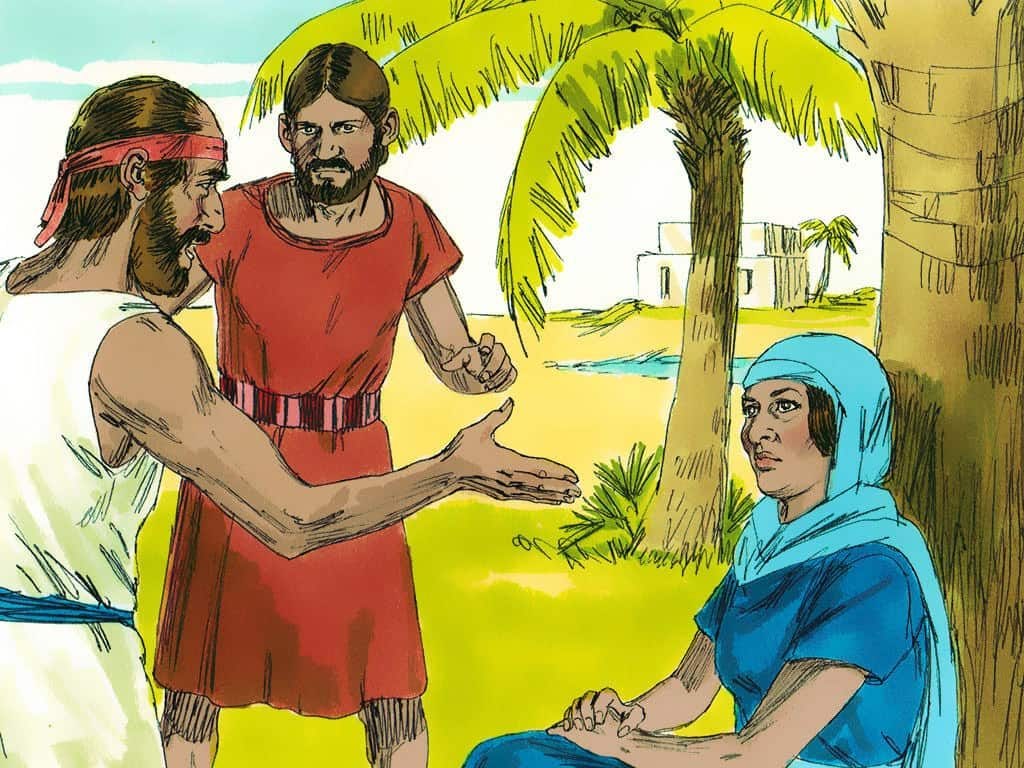
Photo credit: livingwordlightoflife.com
In Judges 4, things are tricky. Earlier passages tell us the names of judges who delivered God’s people—Othniel (Judg. 3:7–11), Ehud (3:12–30), and Shamgar (3:31). But in Judges 4, the one who judges Israel (Deborah, according to 4:4–5) is not the same one who leads Israel into battle and on to victory. This latter role belongs to Barak, whom Deborah the judge summons (4:6–7).
It’s as if the judge-role, which Deborah occupies, is fulfilled by Barak’s military victory. Barak is a kind of judge, in the delivering-Israel-from-oppression sense, even though he isn’t called a judge. Deborah doesn’t pick up a sword and shield and head into battle. Instead, she summons Barak and commissions him to do that. He leads thousands of Israelites into a region of Naphtali where they overcome the Canaanite army of King Jabin and General Sisera (Judg. 4:10, 12–16).
Barak’s plan was to pursue every Canaanite soldier who had been part of King Jabin’s army, an army led by a man named Sisera. And “all the army of Sisera fell by the edge of the sword; not a man was left” (Judg. 4:16). Barak even pursued General Sisera (4:22), seeking to put him to death.
The glory of victory wasn’t attributed exclusively to Barak, however. When Deborah initially commissioned him and assured him of victory (Judg. 4:6–7), he said, “If you will go with me, I will go, but if you will not go with me, I will not go” (4:8). Does this response seem surprising to you? He would refuse to go, even though Deborah provided a word from the Lord? He would refuse to go, even though Deborah assured him of victory from the Lord?
Deborah’s response to Barak’s response is telling: “I will surely go with you. Nevertheless, the road on which you are going will not lead to your glory, for the LORD will sell Sisera into the hand of a woman” (Judg. 4:9). Though commanding Israel’s army against King Jabin, Barak will not slay Sisera. This honor would go to a woman (who is thus far unnamed).
The words of the prophetess to Barak confirm that his conditional statement—“If you will go with me, I will go, but if you will not go with me, I will not go”—is not appropriate. He should have gladly submitted to the Lord’s word and not spoken the way he did.
Does this mean Barak has no faith? We shouldn’t assume a total lack of faith. His initial response to Deborah was lacking, but he nevertheless led Israel’s troops into battle. He charged down Mount Tabor with thousands of soldiers and defeated the Canaanites (Judg. 4:14–15). And he even went in pursuit of Sisera (4:22).
The writer of Hebrews, then, includes Barak’s name in the “hall of faith” in Hebrews 11. In Hebrews 11:32–34, we read:
And what more shall I say? For time would fail me to tell of Gideon, Barak, Samson, Jephthah, of David and Samuel and the prophets—who through faith conquered kingdoms, enforced justice, obtained promises, stopped the mouths of lions, quenched the power of fire, escaped the edge of the sword, were made strong out of weakness, became mighty in war, put foreign armies to flight.
Barak is named alongside the judges Gideon, Samson, and Jephthah. This inclusion may confirm my earlier statement that Barak is to be considered a kind of judge alongside Deborah in Judges 4, even though he is not called such. In other words, though Deborah is the one who was judging Israel (Judg. 4:4), Barak completed the responsibility of deliverance, a responsibility with which Deborah entrusted him.